How to Use The Cigar Guys Flavor Wheel to Describe (and Choose) Your Next Cigar
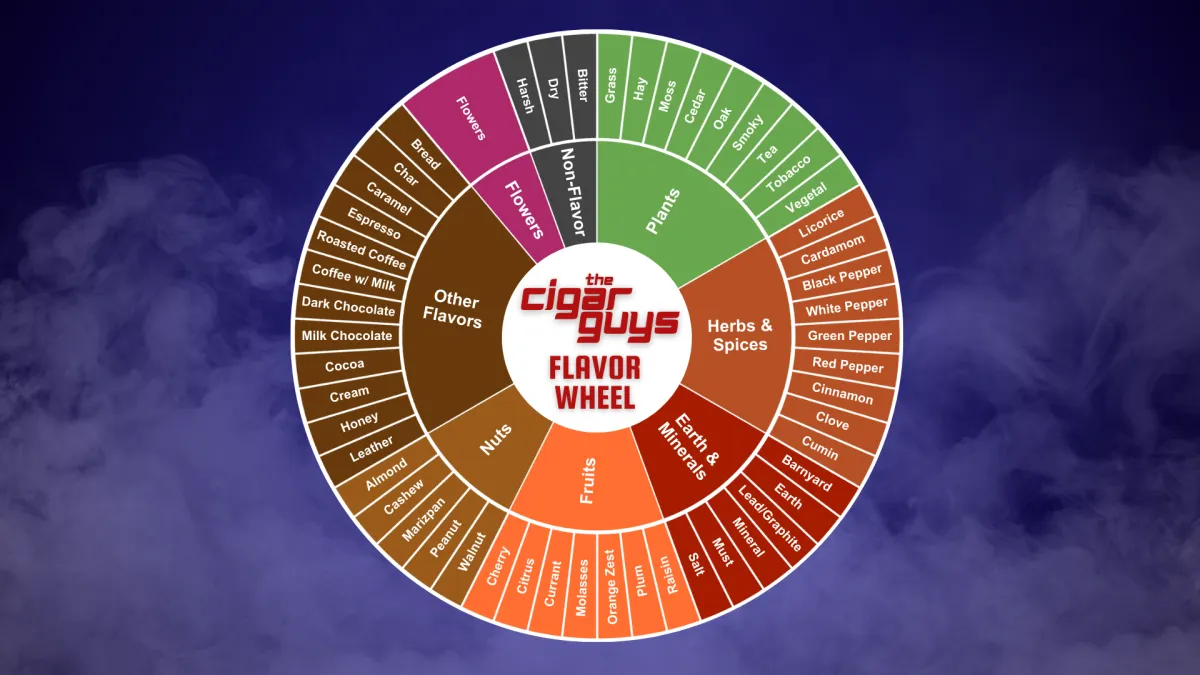
Ever finish a cigar knowing you loved it (or didn’t) but struggling to say why? That’s exactly what The Cigar Guys Flavor Wheel is for. It gives you a shared vocabulary for what’s happening on your palate, so “it was good” turns into “cedar and black pepper up front, cocoa and caramel by the end.” Here’s how the wheel is laid out and how to put it to work, both to describe what you’re smoking and to figure out what you might enjoy next.
What’s on the wheel
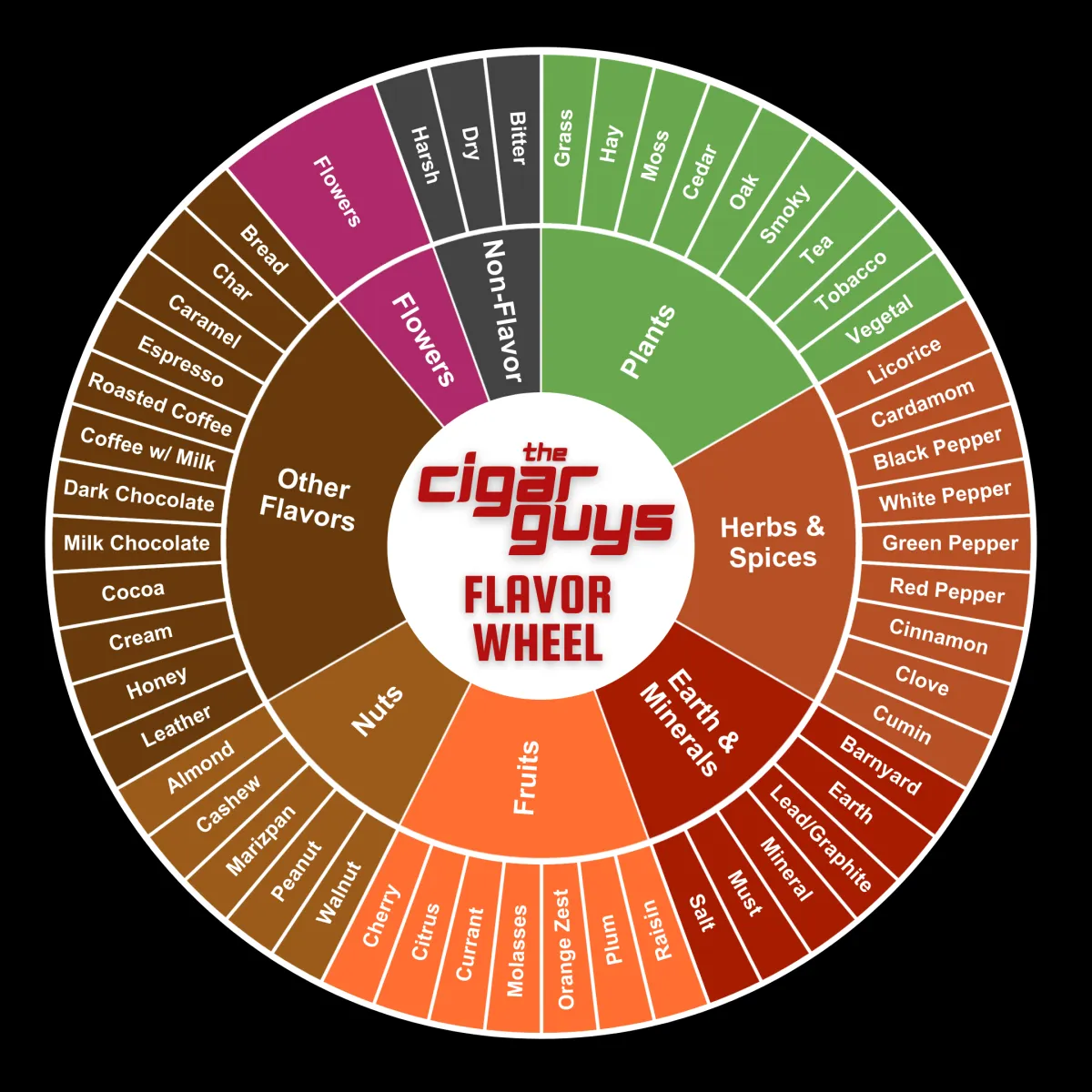
The wheel is built in two rings. Eight flavor families sit around the center, and each one fans out into the specific notes you’re actually tasting for:
- Plants: grass, hay, moss, cedar, oak, smoky, tea, tobacco and vegetal.
- Herbs & Spices: licorice, cardamom, black pepper, white pepper, green pepper, red pepper, cinnamon, clove and cumin.
- Earth & Minerals: barnyard, earth, lead/graphite, mineral, must and salt.
- Fruits: cherry, citrus, currant, molasses, orange zest, plum and raisin.
- Nuts: almond, cashew, marzipan, peanut and walnut.
- Other Flavors: bread, char, caramel, espresso, roasted coffee, coffee with milk, dark chocolate, milk chocolate, cocoa, cream, honey and leather.
- Flowers: floral notes as their own family.
- Non-Flavor: harsh, dry and bitter.
That last family matters more than it looks. “Harsh,” “dry” and “bitter” aren’t flavors a blender is aiming for. They’re usually signs that something’s off, such as smoking too fast, a burn that needs a touch-up, or a cigar that’s too dry. Having them on the wheel lets you separate “I don’t like this profile” from “this cigar isn’t performing right now.”
Get set up before you light
A clean palate makes the wheel far more useful. Skip strong foods or drinks right before you smoke. Water is the best palate cleanser, and some smokers like sparkling water or a mild coffee alongside the cigar. Keep the wheel open on your phone or printed out next to your ashtray, along with something to jot notes on.
Work from the outside in
The biggest mistake new smokers make with a flavor wheel is hunting for a hyper-specific note on the first puff. Do it the other way around:
- Start broad. Take a slow puff, let the smoke sit in your mouth, and ask which family it belongs to. Is it woody like the Plants family? Earthy? Spicy? Sweet?
- Then narrow it down. If you land on sweet, is that closer to chocolate, caramel or honey from Other Flavors, or to raisin and plum from Fruits? If it’s woody, does it read more like cedar or oak?
- Don’t force it. If you can only get as far as “earthy,” write “earthy.” Picking out the finer notes comes with time, and the wheel is a guide, not a test.
Taste it in thirds
Most premium cigars change as they burn, so it pays to check in with the wheel at a few points instead of once. A simple habit is to split the cigar into thirds:
- First third: Note your opening families. Many smokes open with something from Herbs & Spices or Plants.
- Second third: Look for what’s new and what’s faded. This is often where you’ll notice notes from Nuts, Fruits or Other Flavors joining in.
- Final third: See whether the profile deepens, sweetens or gets stronger, and watch for anything from the Non-Flavor family as the cigar heats up. Slow your pace if it starts turning harsh or bitter.
Every cigar is different, so treat those as things to watch for, not rules. The fun is seeing how each smoke moves around the wheel.
Try the retrohale for spice and aroma
A lot of what we call flavor is really aroma. To retrohale, let a small amount of smoke out gently through your nose instead of your mouth. It’s especially good at bringing out the Herbs & Spices family, so you can tell black pepper from white or red pepper, or catch cinnamon and clove you’d otherwise miss. Go easy at first. A little smoke goes a long way, and full-bodied cigars can be intense through the nose.
Write it down and compare notes
The wheel is at its best when you keep a record. For each cigar, jot down the name, the size, and the families and notes you found in each third. A simple line like “First third: cedar, black pepper. Second: almond, cream. Final: cocoa, leather” is plenty.
Then compare. Smoke the same cigar as a friend and see where your notes overlap. Check your notes against a review, too. Every review on our blog is basically us doing this out loud. If someone picks up something you missed, look for it next time. That’s how your palate gets sharper.
Use the wheel to choose your next cigar
After a handful of entries, patterns start to show up. Maybe your favorite smokes keep landing in Other Flavors (cocoa, espresso, caramel), or maybe you light up whenever Herbs & Spices shows up. That’s your flavor profile, and it’s more useful than any score.
- Read descriptions through the wheel. When a review or a lounge staffer describes a cigar, map those words onto the families you enjoy.
- Ask better questions. “I like earthy cigars with some nutty sweetness” gets you a far more helpful recommendation than “something good.”
- Pair with intent. If you like roasted coffee and dark chocolate notes, try drinks that echo them. Our coffee and cigar pairing guide is a good place to start.
- Branch out on purpose. Once you know your home base, pick one neighboring family to explore next, like Fruits if you already love Nuts.
Go deeper
If you want the why behind these flavors, including how soil, curing, fermentation and blending shape what ends up on the wheel, read our earlier piece, How to Taste Cigar Flavor Notes, which the wheel was originally drawn for. For the mechanics that get you to a clean draw in the first place, check out our cigar FAQs.
Ready to try it? Pull up The Cigar Guys Flavor Wheel during your next smoke, take notes by thirds, and let us know what you find. Tag us on X or Instagram @thecigarguys.