Walk into any cigar lounge and you’ll hear a language all its own. Someone’s raving about a “Colorado Maduro,” someone else is complaining that their lancero is “plugged,” and the guy in the corner swears his robusto needs a few weeks in the humidor to “settle down.” If you’re new to cigars, it can feel like everyone got a handbook you missed.
Good news: you don’t need to memorize a dictionary to enjoy a cigar. A couple dozen terms will get you through almost any lounge conversation, cigar band or review. We built the full Cigar Guys Cigar Glossary for the deep cuts. This guide is the short course, grouped the way you’ll actually run into these words.
Part 1: The Anatomy of a Cigar
Every premium cigar is built from three kinds of tobacco, and each one has a job.
- Wrapper: The outer leaf, and the one you see. It’s the prettiest leaf in the cigar and a big part of the first impression, from color and sheen to aroma.
- Binder: The leaf just under the wrapper that holds everything together. It’s chosen more for strength and burn than for looks, but it still adds flavor.
- Filler: The tobacco inside. Filler drives most of a cigar’s strength and flavor. Premium cigars use long filler, meaning whole leaves that run the length of the cigar.
Then there are the ends. The head is the end you put in your mouth, sealed by a small circle of leaf called the cap. The foot is the end you light. Everything between them is the barrel.
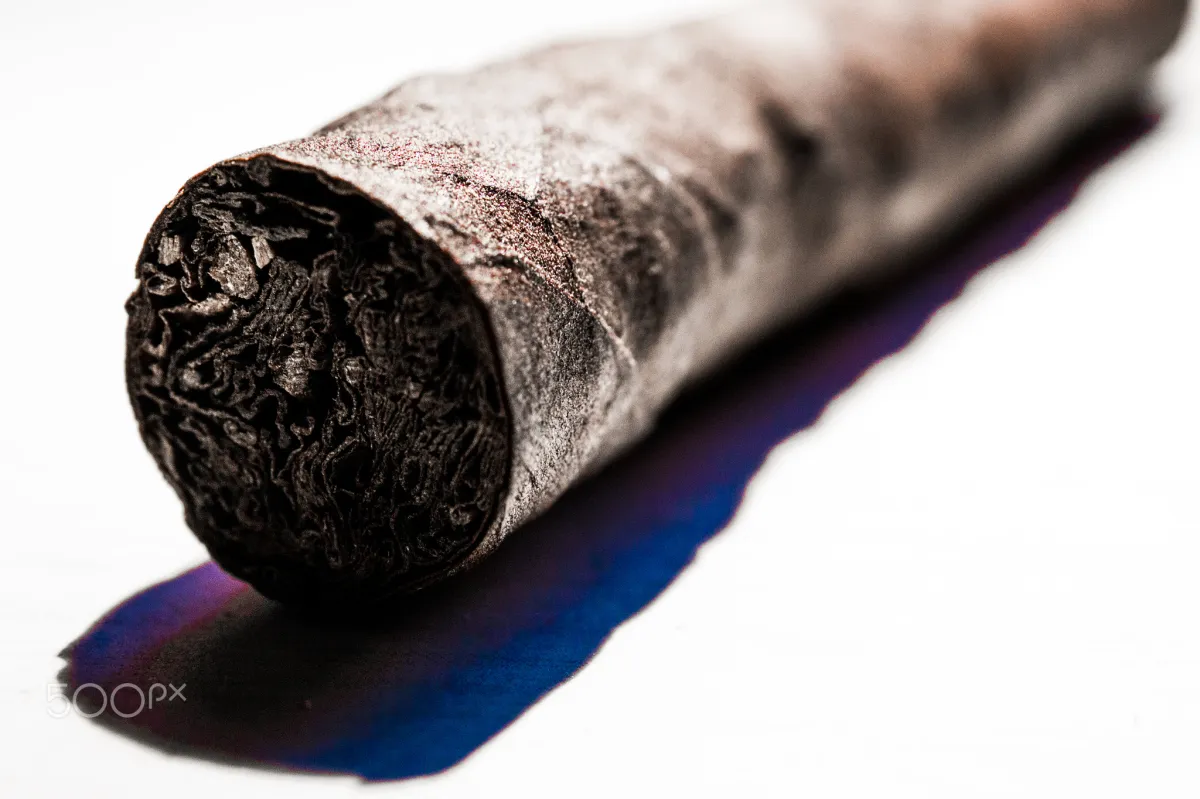
One more piece of anatomy worth knowing comes from the farm. Tobacco leaves are grouped by where they grow on the plant. According to Habanos S.A., volado (the lowest leaves) is light and prized for how well it burns, seco (the middle) is a big contributor to aroma, and ligero (the top) is full-flavored, slow-burning and adds strength. When a band brags about “double ligero,” now you know what that means: more top-of-the-plant power.
Part 2: Wrapper Shades, From Light to Dark
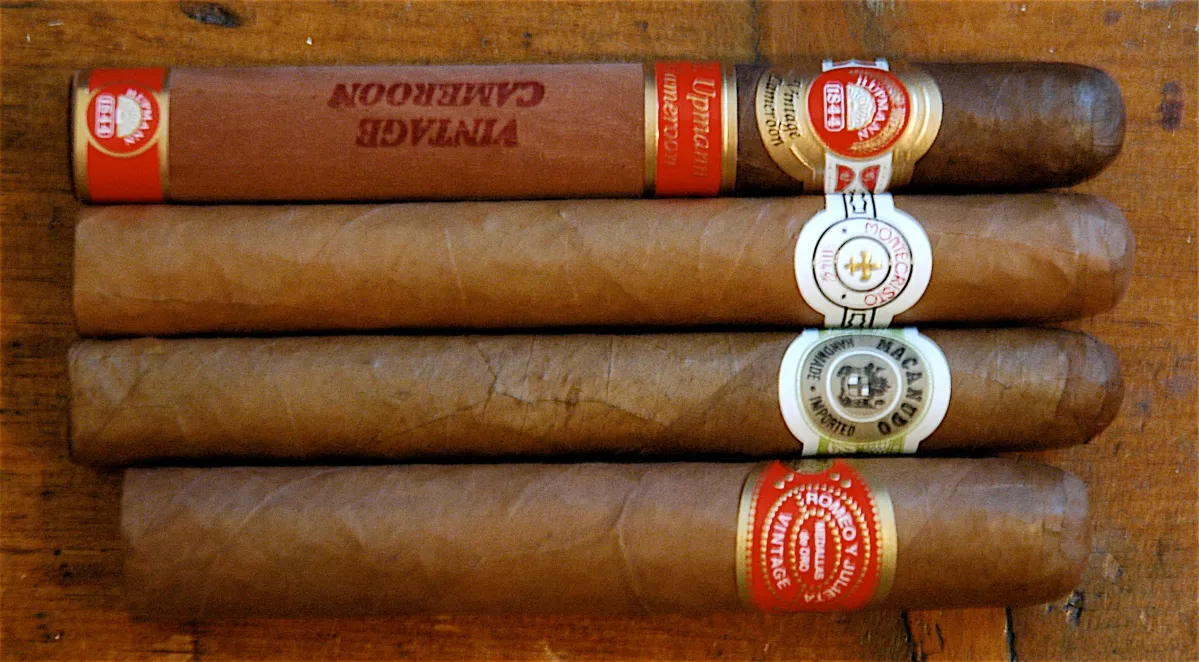
Wrapper color is the first thing you notice, and it comes with its own vocabulary. From lightest to darkest, the names you’ll see most often are:
- Candela: Green, dried quickly so the color stays locked in. Grassy and mild.
- Claro: Light tan, often shade-grown, usually smooth.
- Natural: A medium brown, the everyday middle of the road.
- Colorado: Reddish brown, often with a little spice.
- Maduro: Dark brown, from longer fermentation, extra sun or both. Expect sweeter notes like cocoa, coffee or molasses.
- Oscuro: The darkest shade, nearly black.
Here’s the one myth to drop right away: darker doesn’t automatically mean stronger. A maduro can be surprisingly gentle, and a light wrapper can sit on top of a powerful filler blend. Color tells you about the wrapper’s flavor, not the whole cigar’s strength. For a deeper look at specific leaves like Connecticut Shade, Cameroon and Habano, see our ultimate guide to cigar wrappers.
Part 3: Sizes and Shapes
Cigar sizes are written as two numbers, like “5 x 50.” The first is length in inches. The second is the ring gauge, the diameter measured in 64ths of an inch, so a 50 ring gauge is 50/64 of an inch across and a 64 would be a full inch, as Cigar Aficionado explains.
The classic names you’ll hear the most:
- Robusto: Short and thick, typically around 5 x 50. A popular “one-hour” size.
- Corona: The traditional benchmark, roughly 5½ x 42 to 44.
- Toro: A little longer and thicker than a robusto.
- Churchill: Long and stately, around 7 x 47 to 48.
- Lancero: Long and slender, about 7½ x 38 to 40. Fans say it shows off the wrapper best.
- Gordo: Big ring gauges, usually 60 and up.
Straight-sided cigars are called parejos. Anything with a taper or curve, like a torpedo, belicoso or perfecto, is a figurado. A box-pressed cigar has squared-off sides instead of a round body.
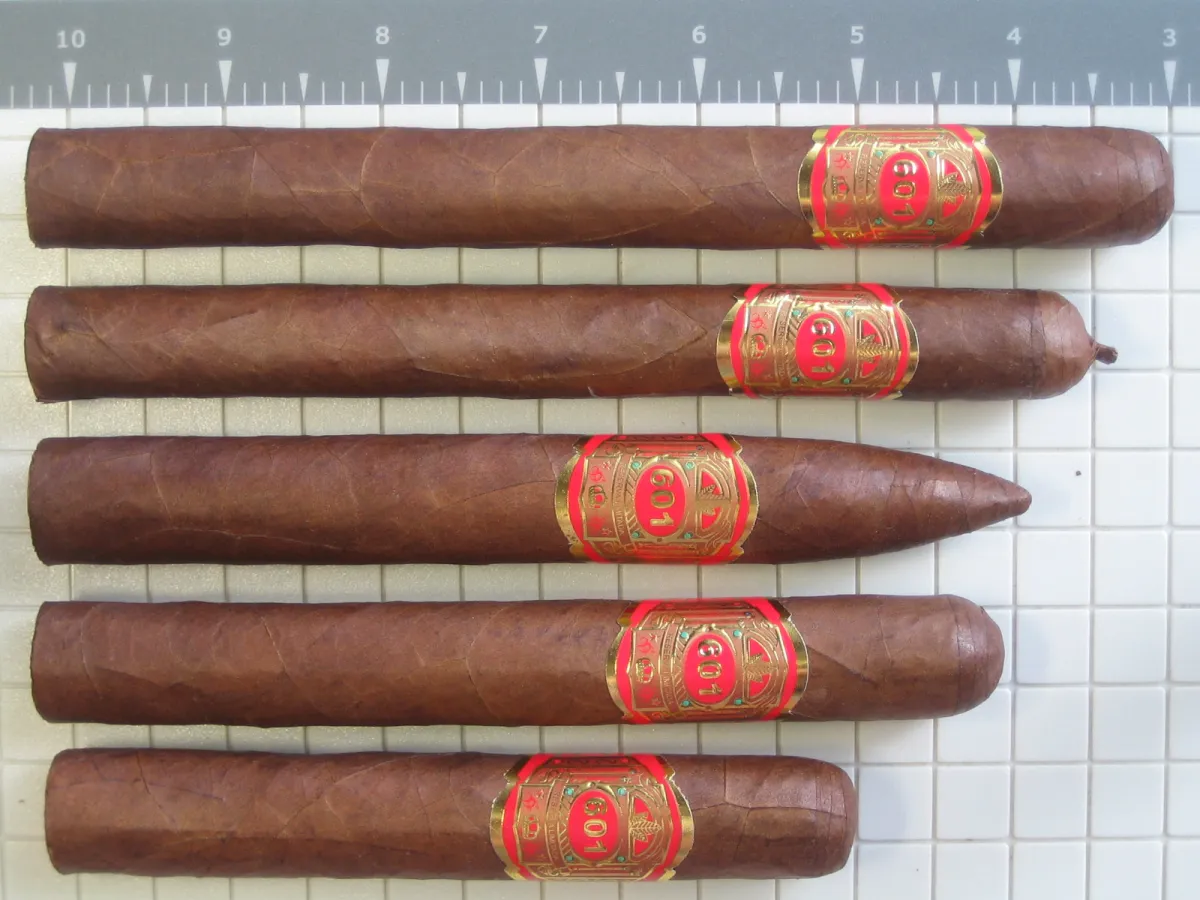
Size also shapes the experience. Cigar Aficionado notes there’s no direct link between size and strength, but thinner cigars tend to burn hotter than thicker ones. We dig into why in Why Size Matters, and figurado fans should check out our guide to figurados.
Part 4: Cutting, Lighting and the Smoke
These are the words you’ll use every time you light up.
- Cut: Removing the cap so air can pass through. A guillotine slices it straight off, a V-cutter notches a wedge, and a punch bores a small hole. Our cutting guide walks through all three.
- Cold draw: A puff on the cut cigar before lighting, to check airflow and catch early flavors.
- Toast: Warming the foot evenly before you light it properly.
- Draw: How easily smoke moves through the cigar. You want light resistance, like sipping through a straw.
- Body vs. strength: Body is how full and heavy the smoke feels on your palate. Strength is the nicotine. They’re related but not the same thing.
- Finish: The flavor that lingers after you exhale.
- Retrohale: Gently pushing a little smoke out through your nose to pick up more aroma. Start small.
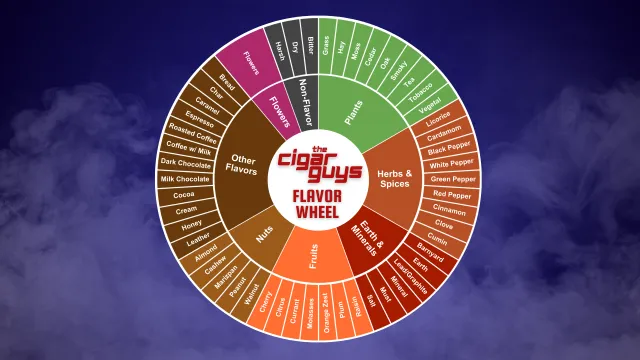
When you’re ready to put names to the flavors you’re tasting, the Cigar Guys Flavor Wheel is your next stop.
Part 5: Burn Trouble, Translated
Even great cigars misbehave sometimes, and the lounge has a name for every problem:
- Canoeing: One side burns faster than the other.
- Tunneling: The center burns down while the wrapper doesn’t keep up.
- Coning: The outer leaves burn faster, leaving a pointed cone of ember.
- Plugged: The draw is so tight you barely get smoke.
- Hot: You’re puffing too fast and the smoke turns harsh. Slow down.
We cover the fixes for each one in How to Fix the Most Common Burn Problems.
Part 6: Storage Talk
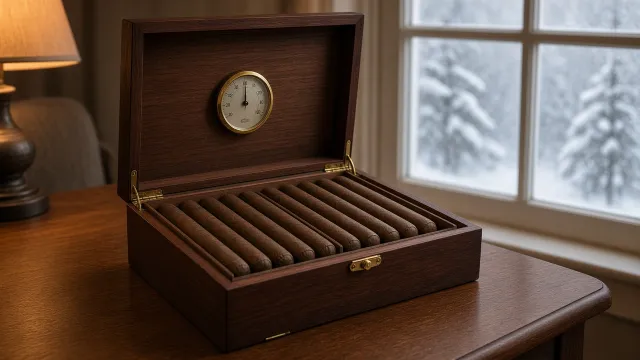
Last stop: the humidor, the box, cabinet or room that keeps cigars at the right humidity. A hygrometer measures that humidity. The old 70/70 rule (70°F, 70% relative humidity) is a solid starting point, though plenty of smokers like it a bit drier. Bloom is a harmless white powder that brushes right off. Mold is fuzzy, stains when you wipe it, and means something’s too damp. Learn the difference. Heading into colder months? Our winter humidor care guide has you covered.
Keep Learning
That’s your starter vocabulary. You’ll pick up the rest, like herf, nub and BOTL, one lounge visit at a time. When you hit a word you don’t know, the full Cigar Guys Cigar Glossary has it, with pronunciation guides for the Spanish terms, so you can talk tobacco with confidence. And if you want to hear these words in action, catch the latest episode of The Cigar Guys Podcast.