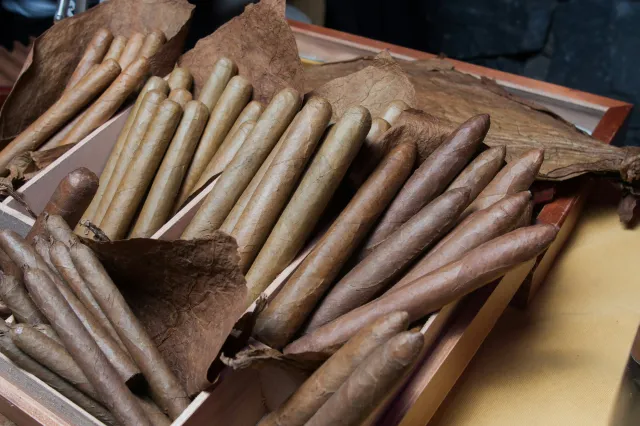
Winter Humidor Care: How to Keep Your Cigars From Drying Out When the Heat Comes On
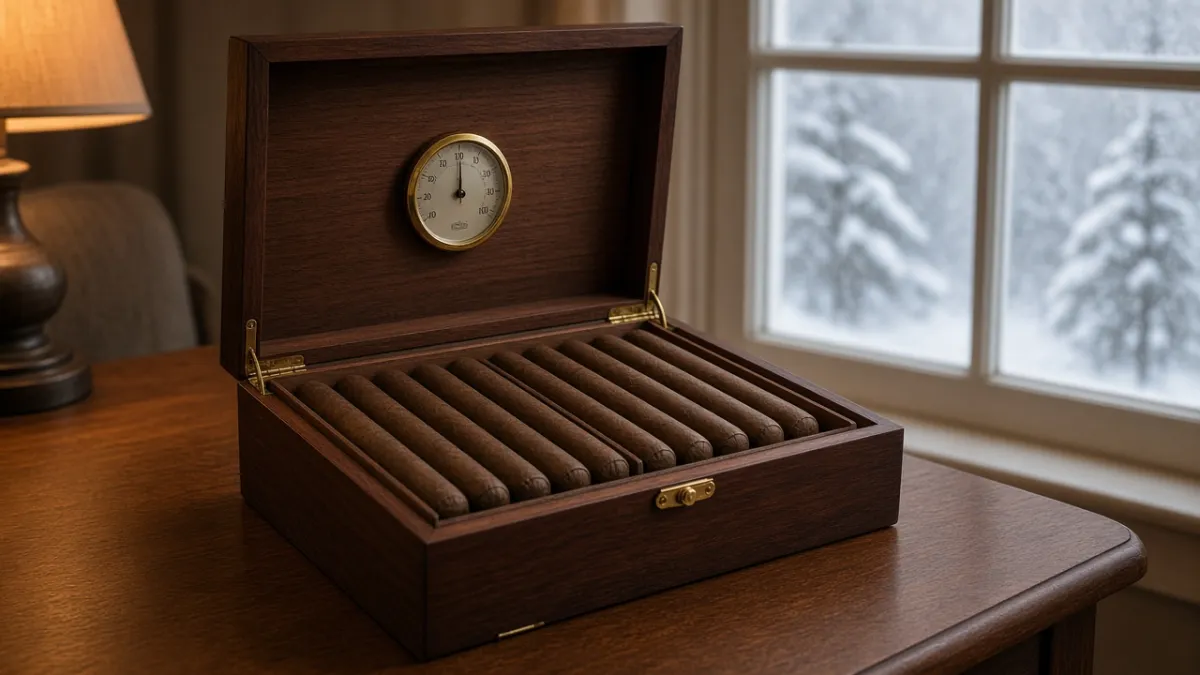
Every fall, the same thing happens in a lot of cigar households. The heat clicks on, the house gets cozy, and a few weeks later someone lights a cigar from the humidor and it cracks, burns hot and tastes flat. The cigars didn’t change. The air around them did.
Winter is hard on humidors, especially if you live somewhere with real cold. Here’s what’s going on and how to keep your cigars in shape until spring.
Why Winter Dries Out Your Humidor
There are two problems working together. According to Boveda, the humidity-control company, cold outdoor air holds less moisture, and indoors your heating system is pushing out dry air. A wooden humidor isn’t sealed, so when the room around it gets very dry, that dry air keeps pulling moisture out of the box.
That’s by design, by the way. Cigar Aficionado points out that a humidor isn’t an airtight container, and it’s better to have some air circulating between your cigars than to pack them in tightly. The tradeoff is that a dry room has a much easier time winning.
Boveda says glass-top humidors and drafty wood humidors are especially vulnerable this time of year, and that a glass-top or inexpensive model can run 2 to 5 percentage points off your target, or more.
Know Your Target Numbers
Before you fix anything, know what you’re aiming for. Cigar Aficionado’s humidor guide describes the ideal as a consistently tropical environment of about 68 to 70°F and 70 to 72 percent humidity. Boveda puts the ideal humidity range a little wider, between 65 and 72 percent. Most smokers land somewhere in that window, based on how they like their cigars to burn.
The most important word there is consistently. Boveda’s advice is to keep humidity from swinging in and out of the ideal range. A humidor that holds a steady 68 percent is better than one that bounces between 60 and 75.
Step One: Trust Your Hygrometer (After You Check It)
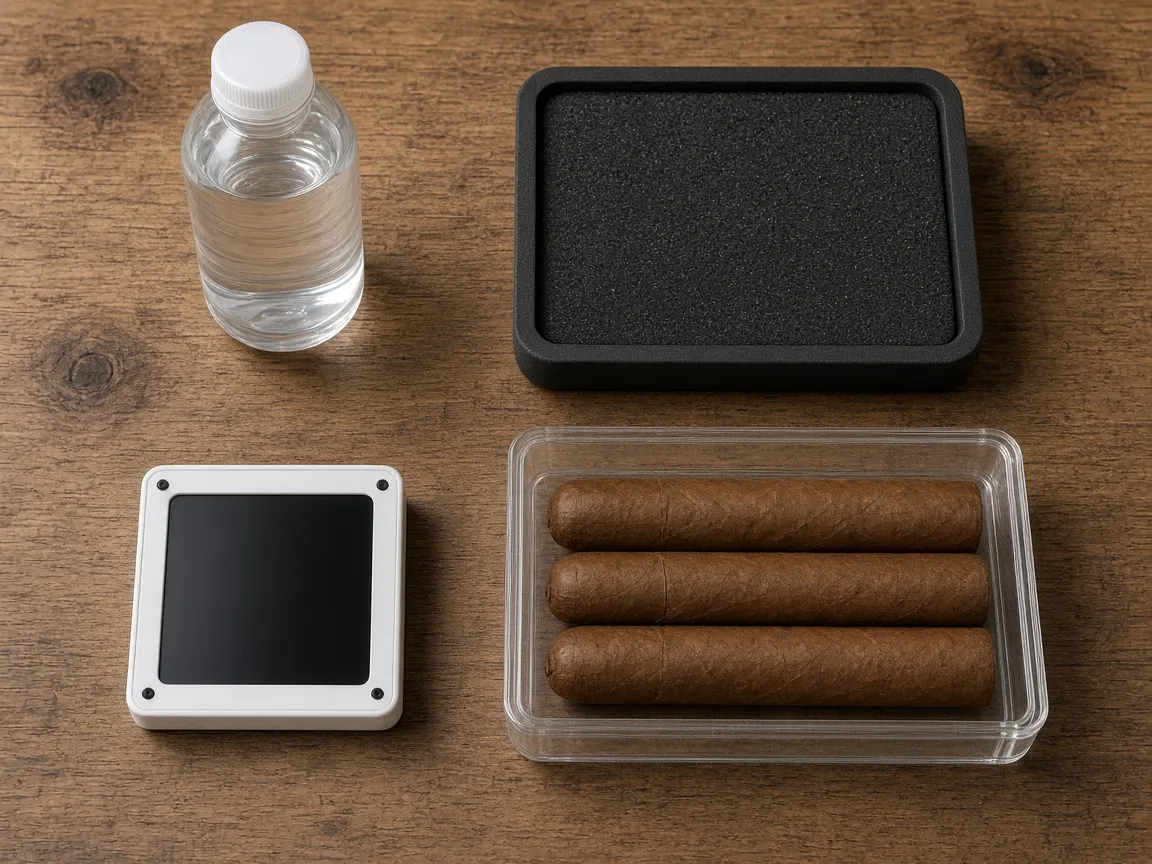
A hygrometer is the little gauge that reads humidity, and it’s only useful if it’s accurate. Boveda recommends recalibrating it every six months, and fall is a smart time to do it. Its seasonal checklist goes like this:
- Calibrate your hygrometer.
- Take a reading of your humidor with the freshly calibrated gauge.
- Adjust your humidification based on that reading and the season you’re heading into.
Don’t rely on the gauge alone, though. Cigar Aficionado’s rule is that the real measure is the condition of the cigars themselves. If they show a little oil, conditions are right. If they feel too dry, add more water.
Step Two: Move It Away From the Heat
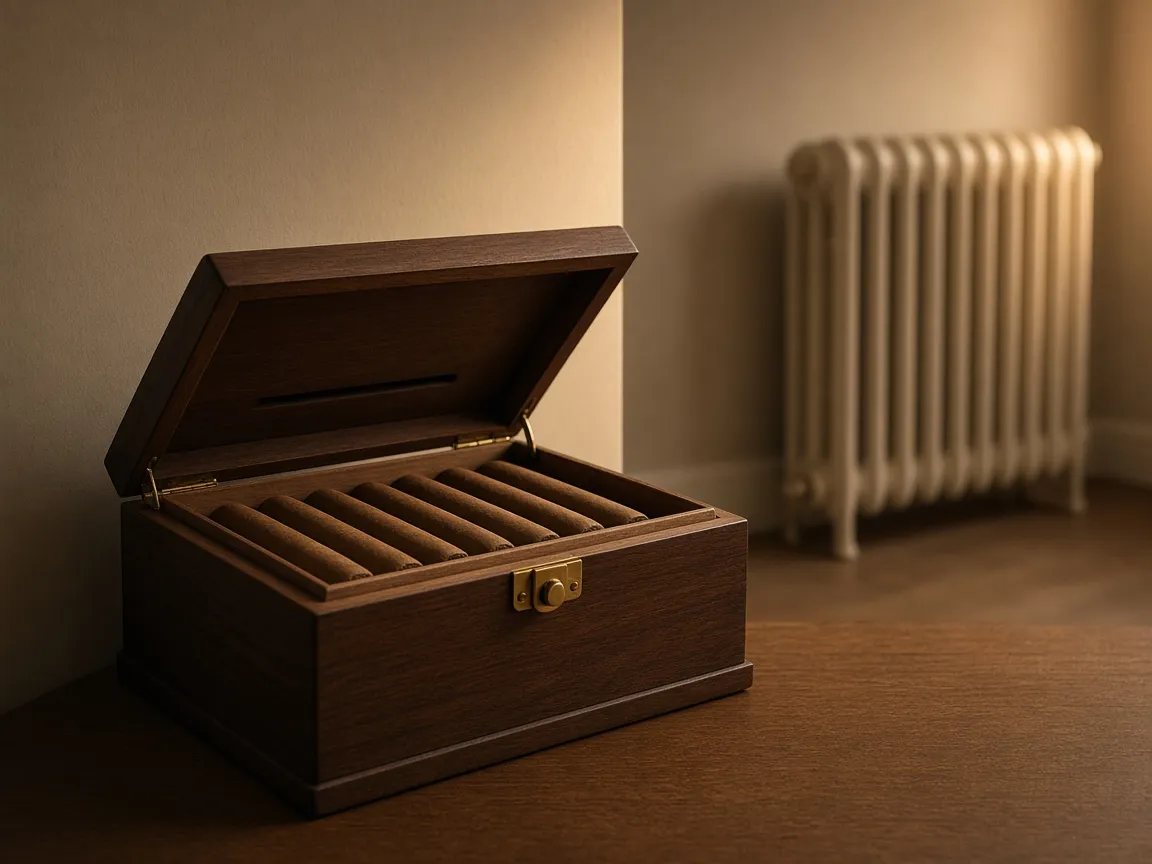
This one is free. Cigar Aficionado warns against exposing a humidor to temperature extremes, including direct sunlight or sitting on top of a radiator or air conditioner. In winter that means keeping it off the mantel, away from heating vents and baseboard heaters, and out of the sunny window.
An interior wall in a room that doesn’t get too warm is usually a good spot. Steady temperature makes steady humidity much easier to hold.
Step Three: Keep the Lid Shut and Use Distilled Water
It sounds obvious, but every time the lid opens in a dry house, you let out humid air and let dry air in. Cigar Aficionado’s maintenance advice for humidors is simple: keep the lid or door shut and periodically add distilled water to the humidifying device.
The distilled water part matters. Unless the manufacturer says tap water is fine, Cigar Aficionado says to use distilled. Minerals in tap water collect on the humidifier and clog it, which is the last thing you want when it’s working its hardest.
Expect to refill more often in winter than in summer. That’s normal.
Step Four: Bump Up Your Humidification
If your readings keep sliding even after you’ve moved the box and kept it closed, it needs more moisture going in. If you use two-way humidity packs, Boveda’s suggestion is to step up to a higher humidity level in a wooden humidor during the dry months, then step back down in spring. One tip on Boveda’s winterizing podcast page is to swap from 69 percent to 72 percent packs in the fall to get through a dry Minnesota winter. Boveda also says never to mix different humidity levels in the same humidor.
If you use a sponge or gel humidifier instead, the same idea applies: check it more often and keep it charged.
Step Five: Let New Cigars Settle First
Here’s one a lot of people miss. According to Boveda, cigars can draw moisture from each other. If you drop a handful of dry cigars into your humidor in January, they’ll pull humidity from everything else in there.
Boveda’s fix is to let new cigars stabilize first in a non-porous container, such as an acrylic humidor or a lidded plastic container with humidification, then move them into the wooden humidor once they’ve reached your target. That’s a good habit for holiday gift cigars too. If you’re already planning those, our holiday cigars guide has more ideas for the season.
When to Rethink Your Setup
If you’ve done all of the above and your humidor still can’t hold steady, it may be the box. Boveda notes that the construction and condition of the wood and the seal can cause moisture loss, and suggests that people in places that are hard on cigars consider a closed or airtight storage system. That’s not a reason to give up on a nice wooden humidor, but it’s worth knowing that a cheap one fighting a dry winter is an uphill battle.
The Cigar Guys Take
We think of winter humidor care as a little seasonal routine, like changing the furnace filter. Check the gauge, move the box away from the heat, keep the lid closed, top it off with distilled water and give new cigars a few days to settle. None of it takes long, and it’s the difference between a cigar that burns slow and tastes the way the blender intended and one that burns hot and harsh.
It also protects the cigars you’ve been saving. If you’re resting a few for a special occasion, steady humidity is how they stay at their best. Our look at this fall’s aged-tobacco releases shows how much patience goes into these leaves before they reach you. For more on how the wrapper affects what you taste, see our ultimate guide to cigar wrappers. And if you want to clear up a few other storage beliefs, we tackle some in common myths about premium cigars.
Keep them humidified, and we’ll see you on the next episode.
Sources: Cigar Aficionado: Storing Cigars · Cigar Aficionado: Humidors · Boveda: It’s Winter! How to Deal with Low Humidity in Your Humidor · Boveda: How to Winterize Your Humidor