How to Cover a Live Event as a Podcaster or Creator: Our Before, During and After Plan
Trade shows, festivals, product launches and conferences hand a podcaster some of the best material there is: real faces, real conversations, B-roll and stories you will never get from behind a studio mic. They also have more moving parts than almost anything else you’ll make.
You know the list: a press pass request nobody answered, a must-have shot nobody was assigned, an interview with no signed release, and a recap that adds Instagram views to LinkedIn impressions until nobody trusts the total.
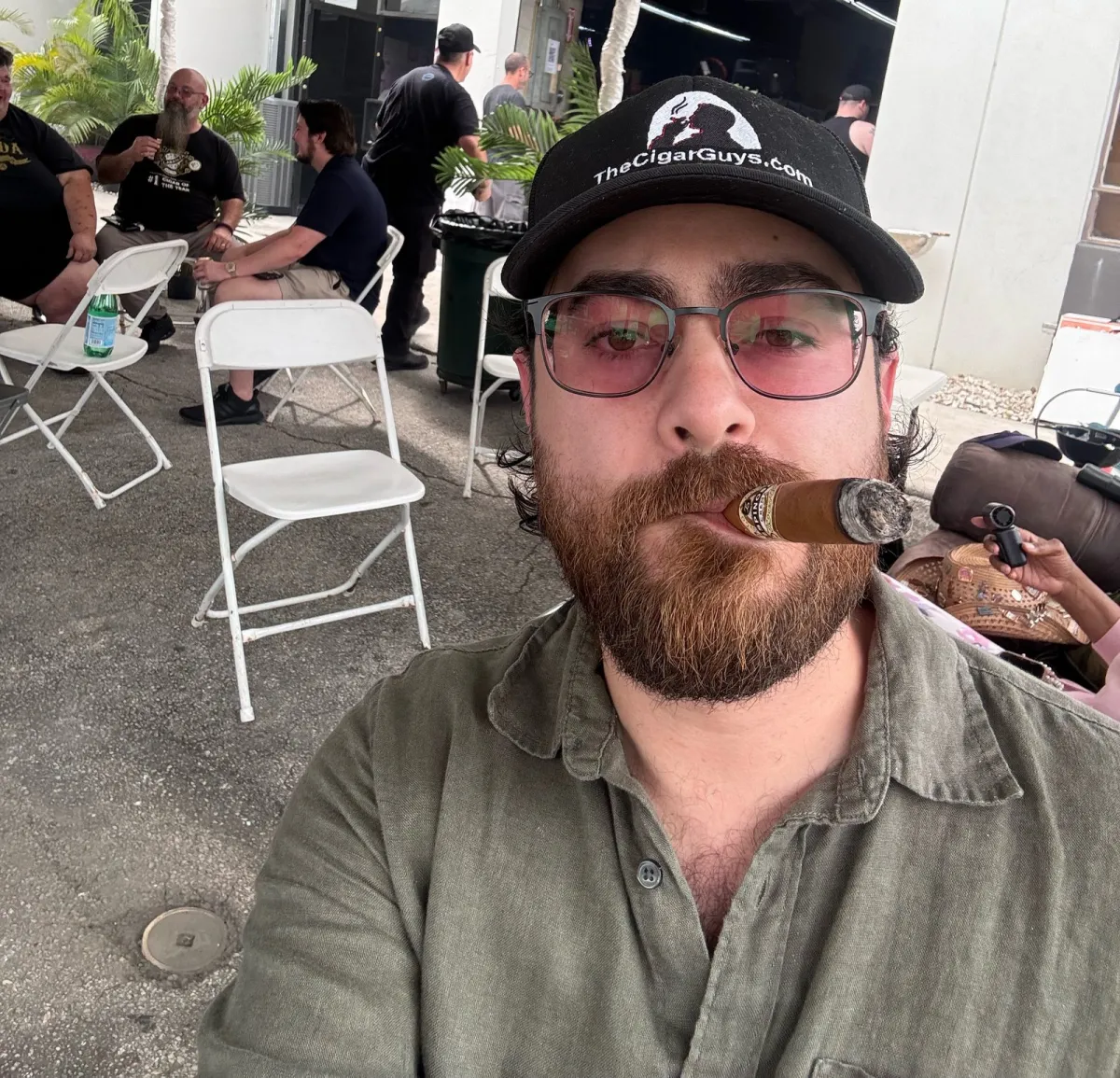
That isn’t a talent problem. It’s a planning problem. Covering events is a regular part of how we run The Cigar Guys Podcast, from heading to PCA 2026 in New Orleans to Day 1 of La Zona Palooza 2026 at Espinosa Cigars. Here’s the before, during and after plan we think every event needs, and the kit we built so you don’t start from a blank page.
Before the Event: Eight Weeks Out to the Night Before
Lock the scope in writing
If a brand, exhibitor or sponsor is paying you, agree on the deliverables first: which booths or sessions, how many posts, which files, by when, and who signs off. One email everyone can point to keeps scope from wandering on the show floor.
Ask for media passes early
Many organizers publish a media policy with an application deadline, sometimes weeks ahead. Read it, then send your request six to eight weeks out or by their deadline. Include your outlet and what you publish, who needs a pass, links to past coverage, your coverage plan, your gear (especially lights, tripods or drones) and any client you’re working for.
Only share audience numbers you can back up. The organizer decides who gets a pass, but a complete request is easier to approve. No reply? Follow up.
Build a shot list and an interview shortlist
Put the must-haves at the top: the shots the story or the client can’t live without. For each key moment, plan a wide, a medium and a close-up, and shoot both vertical and horizontal if you post to both. Grab about ten seconds of room tone wherever you’ll interview people. Your editor will thank you.
Send interview requests two to four weeks ahead and confirm times and spots the week before.
Write a run of show
For every hour of the event, a run of show answers one question: who is covering what, and where? It’s also how you catch the classic mistake of booking one person in two places at once.
Get releases ready and pack from a list
If you’re recording people, have release forms ready and reviewed for where you’re filming, since rules on recording people, likenesses and minors vary by place, and the venue, organizer and client may add their own. The week before, test every camera, mic, light and power bank and update firmware. The night before, charge everything, format your cards and pack against a written list, not your memory.
During the Event: Capture What Matters, Then Track It
A few habits keep event days from getting away from you:
- Shoot the must-haves first. Get them early, before the schedule slips.
- Release before every interview. Not after, and not “we’ll sort it out later.”
- Back up at every break. Cards fail and bags get left behind.
- Post from a schedule. Draft your during-event captions ahead of time so posting doesn’t pull you off the floor, and know which posts need client approval before they go up.
- Update your tracker at lunch and at close. Shots done, interviews recorded, files labeled. Ten minutes of updates beats an evening of guessing.
After the Event: Deliver, Repurpose and Report Honestly
Log and deliver every file
Log each file with where it’s stored, its release status, its edit status and its delivery deadline. Footage of someone who hasn’t signed a release shouldn’t go out, so mark it on hold until that’s sorted.
Turn one event into a week of content
A strong booth interview can become a podcast segment, a few short clips, an article and a newsletter item. It’s the idea behind the three systems every growing podcast needs, and the Podcast Content Repurposing Kit ($29) is built for turning one long recording into lots of shorter pieces.
Report one platform at a time
This is where most recaps go sideways. Instagram views, TikTok views, LinkedIn impressions and podcast downloads are measured differently, so adding them up produces a number a client can’t rely on. Reach-type numbers shouldn’t be added across posts either, because the same people get counted more than once.
Give each platform its own row, use that platform’s metric names and numbers from its own insights, state the date range, and add a short factual summary of what you covered and delivered.
The Kit That Puts It All in One Place
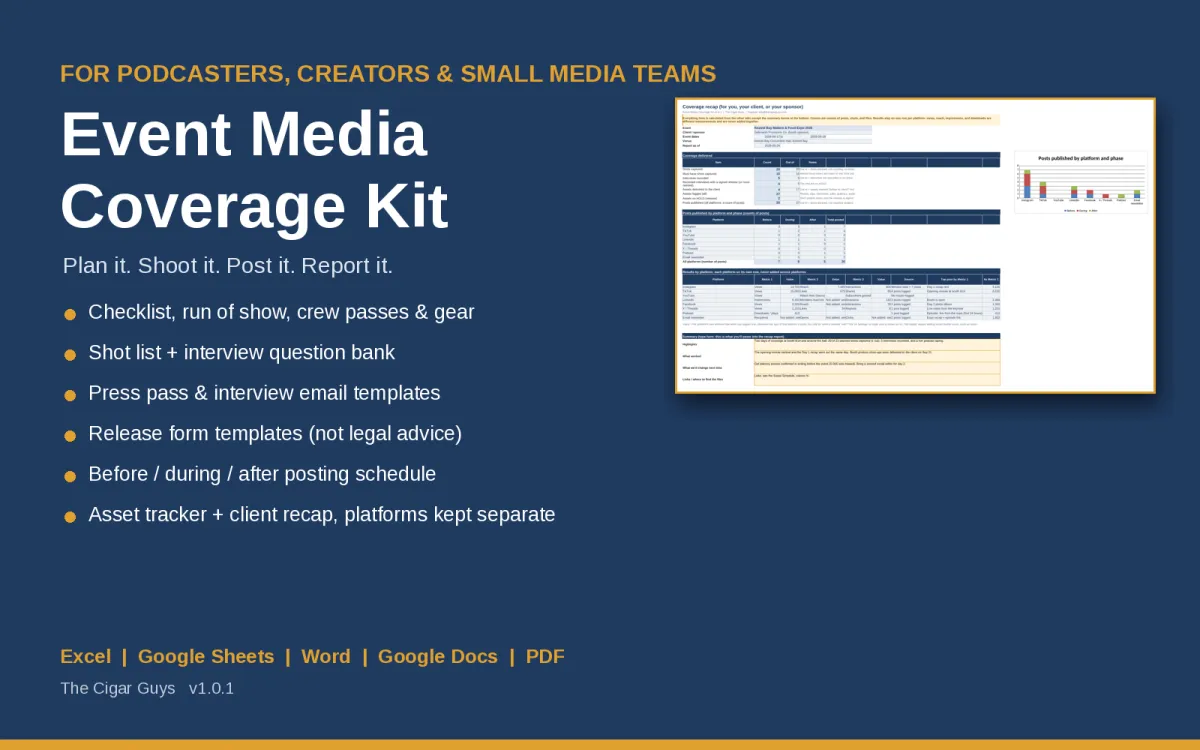
The Event Media Coverage Kit ($39) turns this plan into one planner and a set of ready-to-edit documents. The Excel or Google Sheets planner includes a countdown dashboard, a 35-task checklist dated from your event dates, a run of show that flags double-booked crew, media pass tracking, a 28-item gear list, a shot list that flags missed must-haves, an interviews tab that holds any recording without a signed release, a posting schedule, an asset tracker, and a client recap that keeps each platform separate.
You also get shot list starters for five event types, eight interview question sets, eight outreach emails (including press pass and interview requests), release form templates, 15 caption templates, a recap report template and a completed fictional example event. It works in Excel, Google Sheets, Word, Google Docs and LibreOffice with no macros or add-ons.
To be straight about what it isn’t: it won’t get you press passes or interviews, it doesn’t post for you, and it doesn’t connect to any platform. The release templates are starting points, not legal advice. And nothing in it promises views, reach or sales.
Bundles Worth a Look
If events are one part of a bigger operation, start with these bundles:
- Podcast Business Template Bundle (3 Kits), $69: the Podcast Sponsorship Kit, Content Repurposing Kit and Guest Booking System in one download. The store lists the three at $97 bought separately.
- Creator Business Template Library (All 10 Kits), $149: every kit we make, including the Event Media Coverage Kit and the Brand Deal Tracker, which helps when a brand is paying you for coverage. The store lists the ten kits at $360 bought separately.
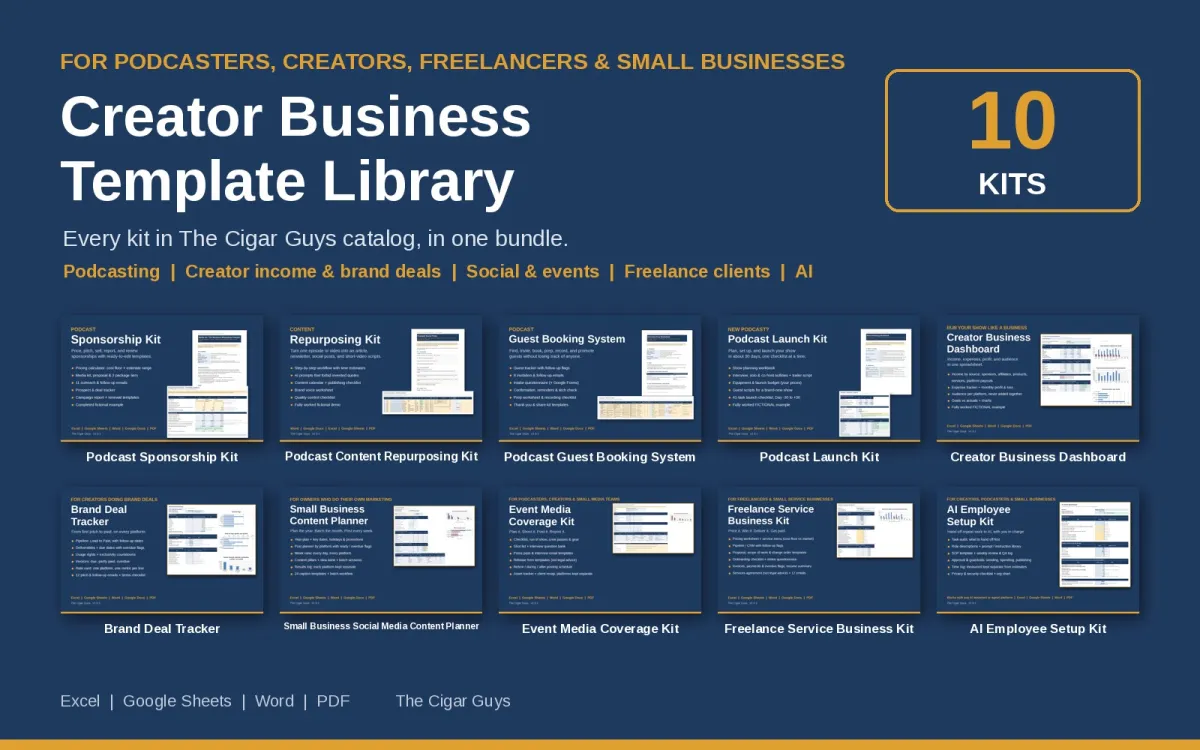
Browse everything at The Cigar Guys store on Payhip. These are instant digital downloads, so all sales are final, but if a file is broken or won’t open, email info@thecigarguys.com and we’ll fix it.
New to this series? Start with running your podcast like a business, then setting up an AI employee without losing control and pricing your freelance work. And if you’re looking for cigar events to cover in the first place, TheCigarEvents.com is our free national calendar of premium cigar events.
Your Next Step
Pick the next event on your calendar and count back eight weeks. If the media pass deadline hasn’t passed yet, that request is your first task. Write your must-have shots on one page, and decide now how you’ll report results, one platform at a time.
Know a podcaster or creator who covers events? We run a simple affiliate program through Payhip. You can sign up here if you’d like to share the kits.